
You spend time and money bringing customers to your online store. Your marketing campaigns perform well, your product pages attract attention, and shoppers add products to their carts. Then, just before completing the purchase, they leave.
This silent revenue leak affects thousands of online businesses across India every day. A few extra form fields, hidden charges, or limited payment choices can push buyers away within seconds.
The good news is that checkout optimization delivers measurable business impact without increasing advertising spend. By identifying friction points and improving the buying journey, you can recover lost sales, improve customer satisfaction, and increase the lifetime value of every visitor who reaches your checkout page.
Learn how to increase organic traffic to your eCommerce website.
Gain clarity on how cart abandonment impacts ecommerce performance and discover strategies to optimize checkout experiences, enhance trust, and increase conversions.
Winning traffic is only the first stage of eCommerce growth. The real opportunity lies in converting that traffic into paying customers.
India's digital commerce market is growing rapidly, but competition is equally intense. Customers compare prices, delivery timelines, payment methods, and user experience within minutes. If your checkout process creates even minor friction, your competitors are only one click away.
Every abandoned cart represents marketing investment that failed to generate revenue. Instead of continuously increasing acquisition budgets, you should focus on improving the final stage of the customer journey where purchase intent is already high and conversion gains can directly improve profitability.
Shopping cart abandonment occurs when a customer adds products to an online cart but exits before completing the purchase. Not every abandoned cart represents a lost sale because many visitors use carts for comparison or future consideration.
The bigger concern is when highly interested buyers leave during the payment process because of avoidable friction. Unexpected costs, lengthy forms, poor mobile experiences, or missing payment options create unnecessary obstacles that reduce conversions.
Understanding these behaviors is the first step to reduce cart abandonment and build a checkout experience that converts intent into revenue instead of missed opportunities.
Every checkout has conversion leaks. High-performing brands identify them early and eliminate them before they affect revenue. Here are the most common reasons consumers leave without completing a purchase.
Customers feel confident when they add a product to the cart, but that confidence disappears when unexpected shipping charges, packing fees, platform charges, or taxes suddenly increase the final amount.


Many customers simply want to buy a product quickly. Asking them to create an account, verify an email address, and set up a password introduces unnecessary effort.
Transparency is the key when it comes to pricing. Displaying the total price, including taxes and shipping fees, on the product page can prevent last-minute cart abandonment due to unexpected costs.
For Example, ASOS, a popular online fashion retailer, displays complete pricing details early in the shopping process to reduce surprises.
Many cart abandonment issues can be prevented during the initial stages of building an ecommerce website by focusing on user experience, mobile responsiveness, and streamlined checkout processes.


Consumers expect flexibility. A customer who prefers online payment may leave if only card payments are available. Another shopper may look for Cash on Delivery, Credit Card Payment, or No-Cost EMI before making a purchase decision.
Ignoring local payment preferences means losing customers who are otherwise ready to buy.
Understand the role of AI in eCommerce for improving visual search.
Customers share sensitive information during checkout, including addresses, phone numbers, and payment details. If the page lacks SSL indicators, trusted payment gateway logos, return policy visibility, or recognizable security badges, many buyers hesitate before completing the transaction.


Mobile users expect instant responses. A checkout page that takes even two extra seconds to load creates uncertainty and interrupts buying momentum. Customers may assume the payment failed or that the website is unreliable.
This problem becomes even more critical when considering the average cart abandonment rate in India, where mobile commerce dominates online retail activity.
The fastest-growing D2C brands also prioritize the best checkout optimizations for D2C stores by reducing page weight, minimizing scripts, and optimizing payment integrations for mobile-first shoppers.
Fixing these six leaks creates the foundation for a checkout experience that converts visitors into loyal customers instead of adding to your shopping cart abandonment statistics.
Learn how AI is shaping the future of SEO services.
Every optimization should remove friction, build confidence, or accelerate decision-making. Small improvements across the checkout experience often produce significant gains in conversion rate, average order value, and customer satisfaction.
The following playbook focuses on practical actions that generate measurable business impacts.

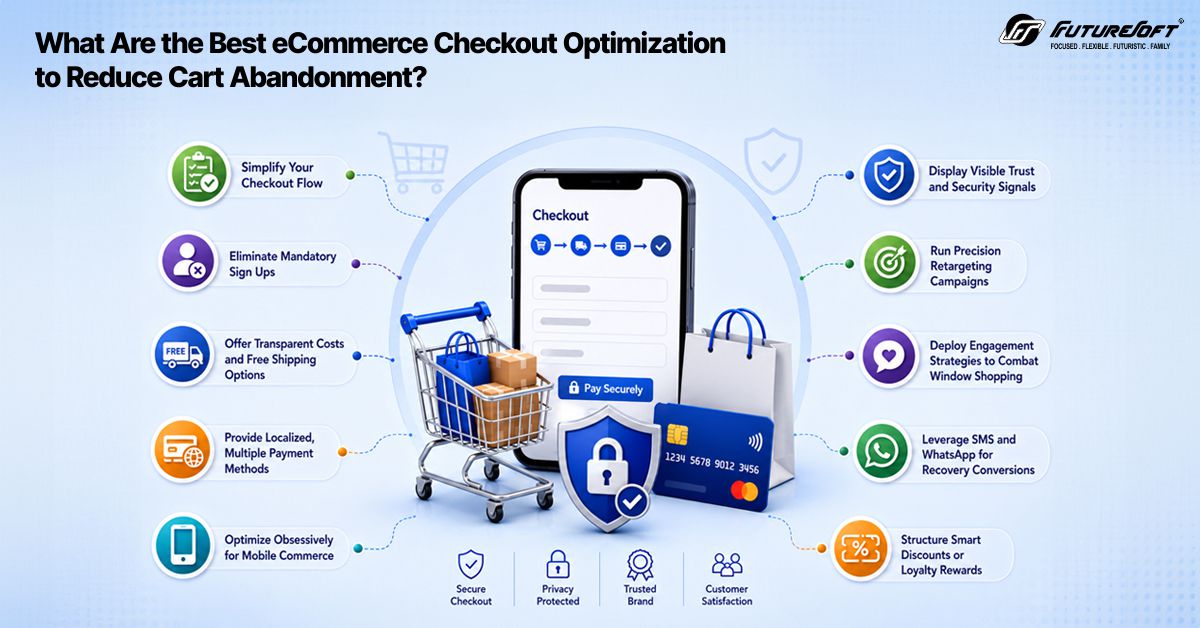
Your checkout should feel effortless from start to finish.
Reduce unnecessary form fields and only request information required to complete the purchase. A single-page checkout helps customers review products, enter shipping details, select payment methods, and place orders without navigating multiple screens.
Clear progress indicators also reduce uncertainty and help buyers understand exactly where they are in the process. Auto-complete addresses and intelligent field validation further reduce typing effort, particularly on smartphones.
Brands looking for how to reduce shopping cart abandonment consistently find that fewer clicks lead to higher conversions.
Customers arrive with one goal: buying a product.
Forcing registration before checkout introduces friction that many shoppers simply refuse to accept. A guest checkout option allows purchases to happen immediately while maintaining a positive user experience.
You can always invite customers to create an account after order confirmation by highlighting benefits such as order tracking, faster future purchases, and exclusive offers.
Adding Google or Apple social sign-in options also reduces effort for returning customers and improves completion rates.
Know how to harness the power of AI for eCommerce.


Nothing frustrates buyers more than seeing the final price increase unexpectedly.
Display shipping charges, taxes, packaging fees, and estimated delivery dates directly on the product page or inside the cart. Customers appreciate honesty and make purchase decisions with complete information.
Many successful brands also introduce free shipping thresholds that encourage larger basket sizes. A simple message like "Add 500 more to unlock free delivery" motivates customers to increase order value instead of abandoning the purchase.
This approach remains one of the most effective cart abandonment solutions for improving conversion rates.
Payment flexibility directly influences purchase completion.
Consumers expect multiple choices that match their preferred payment habits. Your checkout should support Google Pay, RuPay cards, Visa, Mastercard, Cash on Delivery, and Buy Now Pay Later services.
Many premium shoppers also prefer No-Cost EMI options for higher-value purchases.
Offering localized payment methods reduces hesitation and creates confidence that transactions will be completed quickly and securely.
The best checkout optimizations for D2C brands always include payment diversity because convenience translates directly into revenue growth.
Study how to increase online sales by growing the average cart value.

Most online shoppers complete purchases on mobile devices.
Buttons should remain visible while users scroll; forms should automatically trigger the correct keyboard type, and address fields should support intelligent auto-fill functionality.
Large tap targets, readable typography, and fast page rendering create a friction-free experience that keeps buyers focused on completing the purchase.
Testing checkout performance across multiple Android devices and network speeds provides valuable insights that desktop testing alone cannot reveal.
The average cart abandonment rate highlights why mobile optimization deserves executive-level attention rather than being treated as a design preference.
Trust influences every buying decision.
Place secure payment gateway logos near the payment section and make SSL certificates clearly visible throughout checkout. Display return policies, refund timelines, delivery commitments, and customer support contact numbers where buyers can easily find them.
Verified customer reviews and ratings also reinforce confidence during the final purchase stage.
These simple visual elements reduce uncertainty and encourage shoppers to proceed without second thoughts.


Not every abandoned cart is permanently lost.
Behavior-based retargeting campaigns reconnect with customers who already demonstrated buying intent. Dynamic advertisements on Meta and Google can display the exact products left behind along with pricing, availability, or limited-time offers.
Segment audiences based on cart value, browsing history, and purchase frequency to deliver highly relevant messaging instead of generic promotions.
This data-driven approach helps reduce checkout abandonment while maximizing advertising efficiency.
Find out how to increase organic traffic for your eCommerce website.
Many visitors are interested but undecided.
Exit-intent popups can encourage them to stay by displaying low-stock alerts, limited-time offers, exclusive member pricing, or free delivery incentives.
Countdown timers and inventory notifications should create urgency without appearing manipulative. The objective is to help customers make faster decisions rather than pressure them into purchases.
Brands implementing these techniques often report noticeable improvements in conversion performance and customer engagement.


Email recovery campaigns remain valuable, but consumers respond exceptionally well to instant messaging.
A personalized WhatsApp message containing the abandoned cart, product image, and direct checkout link brings customers back with minimal effort. SMS reminders also deliver high visibility and quick engagement.
Timing matters. Sending reminders within the first hour while purchase intent remains high significantly improves recovery performance.
Many businesses exploring cart abandonment solutions now prioritize WhatsApp automation because of its impressive open and click rates.
Discounting should support profitability rather than reduce margins unnecessarily.
Offer reward points, first-purchase coupons, complimentary shipping, or exclusive member benefits instead of deep price cuts. Loyalty incentives encourage immediate conversions while building long-term customer relationships.
Businesses should also reserve personalized offers for high-value carts or repeat visitors instead of making discounts available to every shopper.
This balanced approach improves conversion rates while protecting revenue and strengthening customer retention.
By combining these optimization strategies, brands searching for how to reduce shopping cart abandonment can transform checkout from a conversion bottleneck into one of the strongest drivers of sustainable eCommerce growth.

An optimized checkout experience performs even better when backed by the right technology stack. Modern eCommerce brands should combine analytics, automation, customer engagement, and personalization tools to identify friction points and recover lost revenue without constant manual intervention.
A connected ecosystem allows your team to monitor customer behavior, trigger recovery campaigns, and make data-driven decisions that continuously improve conversion rates.
The highest-performing brands view checkout optimization as an ongoing business process instead of a one-time website update. Continuous testing and automation create compounding improvements that increase revenue month after month.
Discover how to design and execute and effective buyer journey.
Every abandoned cart represents a customer who was interested enough to reach the final stage but encountered a reason not to complete the purchase.
The businesses that outperform their competitors are not always the ones with the largest advertising budgets. They are the ones that remove friction, build trust, simplify payments, and create a checkout experience that feels effortless across every device.
A strategic checkout audit can uncover hidden revenue opportunities that directly improve conversion rates and customer satisfaction. If your business is experiencing high checkout drop-offs, now is the right time to evaluate every step of the buying journey and implement optimization strategies that convert more visitors into loyal customers.
The most effective strategies include simplifying the checkout process, offering guest checkout, displaying transparent pricing, supporting multiple payment methods, optimizing for mobile users, using trust badges, and running automated cart recovery campaigns through WhatsApp, SMS, and retargeting ads.
Together, these improvements remove friction and encourage customers to complete their purchases.
Customers typically leave because of unexpected shipping costs, complicated checkout flows, mandatory account creation, limited payment options, slow page loading, and concerns about payment security.
Addressing these issues can significantly improve conversion rates and customer confidence.
Cart abandonment rates vary by industry and device type, but lower rates generally indicate a healthier checkout experience. Rather than comparing your business with industry averages alone, monitor your own conversion trends and focus on continuous improvement through testing and customer behavior analysis.
Most Indian online shoppers browse and purchase through smartphones. A mobile-friendly checkout with fast loading pages, easy navigation, auto-filled forms, and preferred local payment methods reduces friction and increases completed purchases while improving the overall shopping experience.
Checkout optimization should be a continuous activity rather than a one-time project. Regular A/B testing, customer feedback analysis, performance monitoring, and conversion audits help businesses adapt to changing customer expectations and maintain high conversion rates as technology and buying behavior evolve.
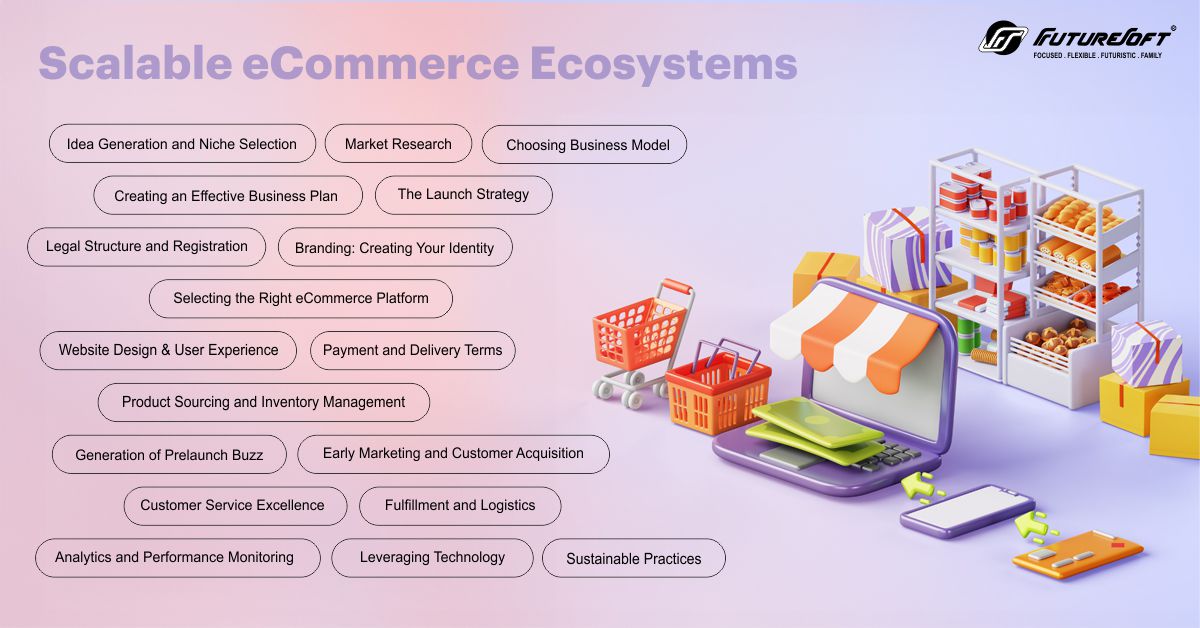
In this competitive eCommerce landscape, building a scalable eCommerce ecosystem isn’t about launching an online store. It’s about creating a business that grows effortlessly with market demands.

In 2025, online shoppers are more demanding than ever. Competition is fierce, algorithms keep evolving, and buyers expect fast, engaging, and personalized experiences before they even consider clicking “Add to Cart”.

In these times, businesses scale and customer expectations are on the rise, so are the cybersecurity risks. In this digital-driven world, eCommerce security is not just a backend responsibility, but a critical pillar of business that protects brand trust, user data, and revenue.
We would love to be a part of your journey to success. Let's team up today!