
Have you ever wondered why your website's traffic grows, but your SERP rankings and lead quality still feel stuck? Many brands invest heavily in content and ads, but overlook the one channel that consistently converts across every customer's interaction.
That gap is where lifecycle email marketing comes in. This blog will explore how email supports visibility, authority, and long-term growth while solving common ranking and retention challenges.
If your email feels disconnected or reactive, this guide will show how to turn it into a revenue-focused growth engine.
Understand how lifecycle email marketing boosts conversions and loyalty through data-driven, stage-specific email automation.
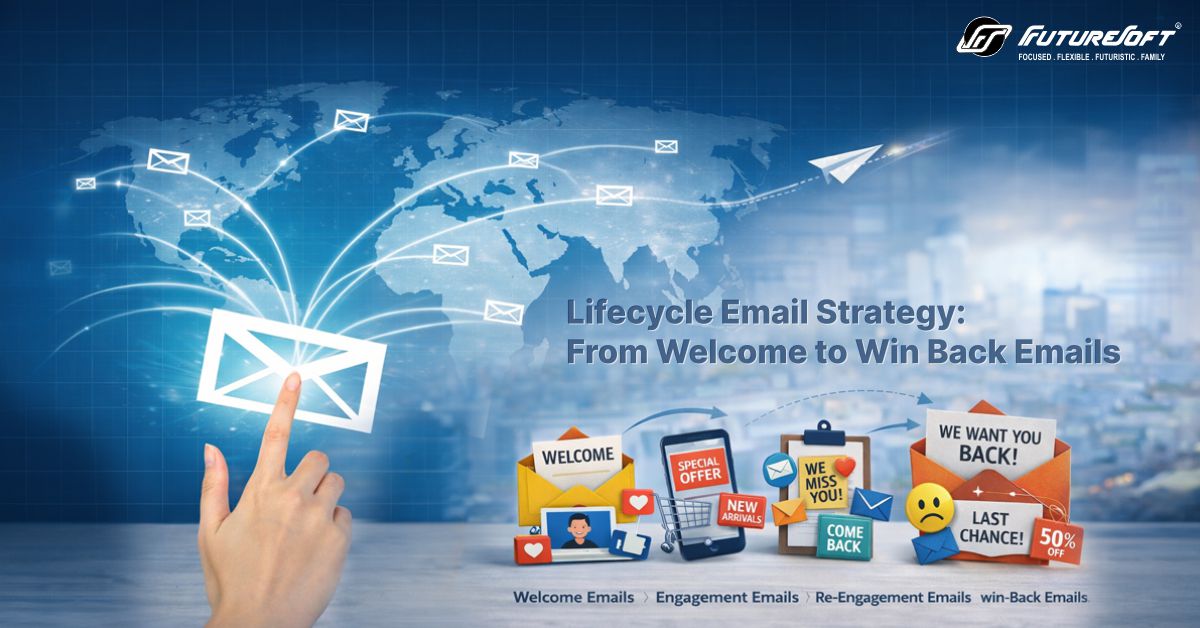
Lifecycle email marketing and effective email marketing are an essential part of brands that want to stay competitive in the crowded SERPs. Companies send more than 376 billion emails daily, yet the average inbox placement rate is below 85%, according to Statista and Validity.
The problem is not volume. It is relevance and timing. Many brands still treat email as a broadcast channel instead of a journey-driven asset. This blog will break down lifecycle email marketing for you from a strategic and execution standpoint. So, stay tuned and find out.
Lifecycle email marketing is a structured approach to sending emails based on where a user is in their customer journey. Instead of sending the same message to everyone, emails are triggered by behavior, intent, and engagement signals.
From a business perspective, lifecycle email marketing supports growth in three ways. First, it improves relevance, which increases open and click rates. Second, it strengthens brand authority by delivering value at the right moment.
Third, it supports SEO and AEO indirectly by driving repeat visits, longer session durations, and branded searches.
For example, a B2B SaaS company using lifecycle email marketing may send a welcome email with a product walkthrough, followed by an engagement email with use case content, then a conversion email offering a demo, and later retention emails with future updates.
Each message supports the next step, not just a sale. This approach reflects modern email marketing techniques where timing and context matter more than frequency.
A welcome email is the first impression after a signup, download, or inquiry. In practice, this email defines how future emails will be perceived. High-performing welcome emails do not push sales immediately. They clarify value, introduce brand voice, and guide the next action.
For example, a marketing services firm might welcome new subscribers with a short introduction, a link to a high-value resource, and a clear statement of what kind of insights they will receive. This approach follows email marketing best practices and reduces early unsubscribes.
Learn how you can leverage generative AI in eCommerce for content creation.


Abandoned emails are triggered when a user starts but does not complete an action, such as filling out a form or completing a checkout. The key here is relevance, not pressure. In real campaigns, abandoned emails that perform best focus on removing friction.
This could mean answering a common objection, offering support, or highlighting trust signals. This is one of the most effective email marketing techniques for recovering warm leads.
Thank you emails often get ignored by marketers, but they are high engagement interaction. These emails confirm actions and reinforce trust.
For example, after downloading a whitepaper, a thank-you email can include related content or invite the user to explore a relevant service page. This supports how to build a good email marketing campaign by extending engagement naturally.


Review emails, request feedback, or testimonials after a positive interaction. Timing is critical. Sending them too early reduces response. Sending them after a successful outcome increases credibility.
In B2B, review emails can ask for feedback on onboarding or consultation experiences. This response later supports trust conversions and even SERP performance through social proof.
Understand how to turn eCommerce analytics into business growth.
Browse abandonment cart emails target users who viewed products or pages but did not act. These emails work best when they reflect browsing behavior and add value.
For example, an eCommerce brand may send a follow-up highlighting benefits, use cases, or FAQs related to the viewed product. This aligns with effective email marketing without relying on discounts.


Post-purchase emails are about relationship building, not upselling alone. They include order confirmation, usage tips, onboarding guides, or cross-sell content. Brands that invest here see higher lifetime value. This stage is critical in lifecycle email marketing because it determines retention and advocacy.
Win back emails target inactive users. The goal is reconnection, not guilt-driven urgency. Successful win-back campaigns acknowledge inactivity, highlight what is new, and invite users back with value-driven messaging. This is where many brands refine their email marketing strategy.
Discover Adobe Commerce SEO best practices that work.


VIP emails focus on your most valuable customers. These messages offer early access, exclusive insights, or priority support. From experience, VIP strengthens loyalty and reduces churn. They also reflect advanced email marketing techniques focused on long-term growth.
In the awareness stage, users are discovering your brand. Emails here educate rather than sell. Content includes blogs, guides, and industry insights. This stage supports how to build a good email marketing campaign by focusing on credibility and relevance.


Engagement emails respond to interactions such as clicks, downloads, or time on site. Messaging becomes more specific and value-driven. This is where effective email marketing builds momentum through consistency and clarity.
Conversion emails support decision-making. They may include case studies, demos, consultations, or comparisons. Strong lifecycle email marketing at this stage focuses on reducing risk and highlighting outcomes.
Find out how to build a scalable eCommerce ecosystem.


Retention emails support ongoing usage and satisfaction. They include tips, updates, and success stories. Retention is where email marketing best practices protect revenue and improve customer lifetime value.
Loyalty emails reward long-term customers. They encourage referrals, reviews, and repeat engagement. This stage reflects mature email marketing techniques that turn customers into brand advocates.

Every stage needs clear metrics. Awareness may focus on opens and clicks. Conversion focuses on leads and revenue. Retention focuses on engagement and churn. Clear KPIs support lifecycle email marketing and allow optimization over time.
Urgency loses impact when overused. Instead, focus on relevance and timing. Decision makers respond better to clarity than pressure. This approach aligns with email marketing best practices used by enterprise brands.
Personalization is not just first names. It includes behavior, role, industry, and intent. Personalized messaging supports effective email marketing and improves engagement without relying on aggressive tactics. These principles also answer how to build a good email marketing campaign in competitive markets.
Learn the best digital marketing tips for B2B startups.
Lifecycle email marketing is not about sending more emails. It is about sending the right message at the right moment across the customer journey. When executed well, it supports traffic growth, lead quality, and long-term brand authority.
For companies evaluating professional email marketing services, a lifecycle-driven approach delivers measurable ROI and stronger customer relationships. By applying the strategies, stages, and email marketing techniques discussed here, brands can turn email into a predictable growth channel that supports both revenue and visibility.
Lifecycle email marketing focuses on user behavior and journey stages, not one-time broadcasts. Unlike a traditional email marketing strategy that sends the same message to all contacts, lifecycle email marketing delivers contextual messages based on actions, intent, and engagement.
This approach follows email marketing best practices, improves relevance, and drives higher conversions through effective email marketing at every stage of the customer lifecycle.
At the awareness stage, track open rates and clicks. During engagement, measure content interaction and session depth. Conversion focuses on leads, demos, or sales. Retention tracks repeat engagement and churn. Loyalty measures referrals and lifetime value.
These metrics guide lifecycle email marketing decisions and help brands understand how to build a good email marketing campaign with clear performance signals.
Most companies see early engagement improvements within 30 to 60 days. Conversion and revenue impact usually appear after 90 days once lifecycle email marketing flows mature. Effective email marketing depends on data quality, segmentation, and consistency.
Brands that apply proven email marketing techniques and optimization cycles see faster and more sustainable results.
Lifecycle email marketing increases repeat visits, brand recall, and content engagement. These signals lead to higher branded searches and longer session durations. Over time, this supports SERP visibility by strengthening authority and relevance.
When aligned with an email marketing strategy focused on value, emails indirectly support organic growth and AEO performance.
Companies should consider email marketing services when internal teams lack lifecycle expertise, automation setup, or performance optimization skills. Outsourcing helps scale faster, apply email marketing best practices, and avoid costly trial and error.
It is especially valuable when brands want predictable results and guidance on how to build a good email marketing campaign that converts.
Business leaders and owners want effective eCommerce marketing strategies to scale their online operations. For the time being, small steps and eCommerce growth tactics might work. However, for long-term success, they need effective strategies that can change their business completely.
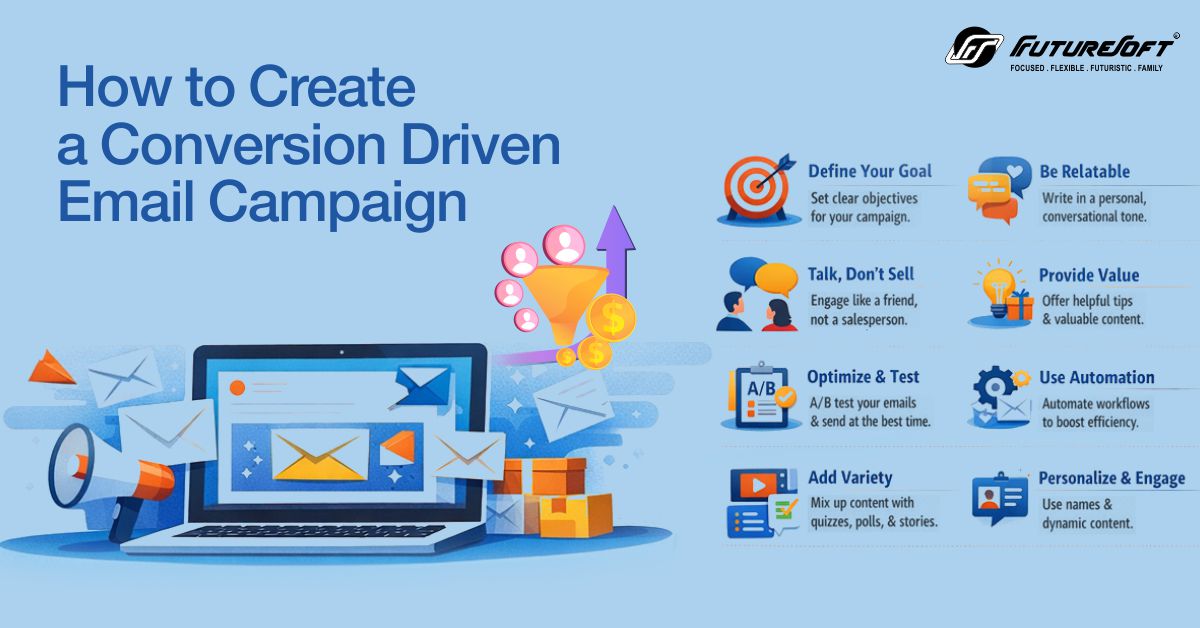
You created a perfect email marketing campaign and sent it to users with the hope of receiving the best results and above-average conversions. However, the results came out differently and were way less than expected.
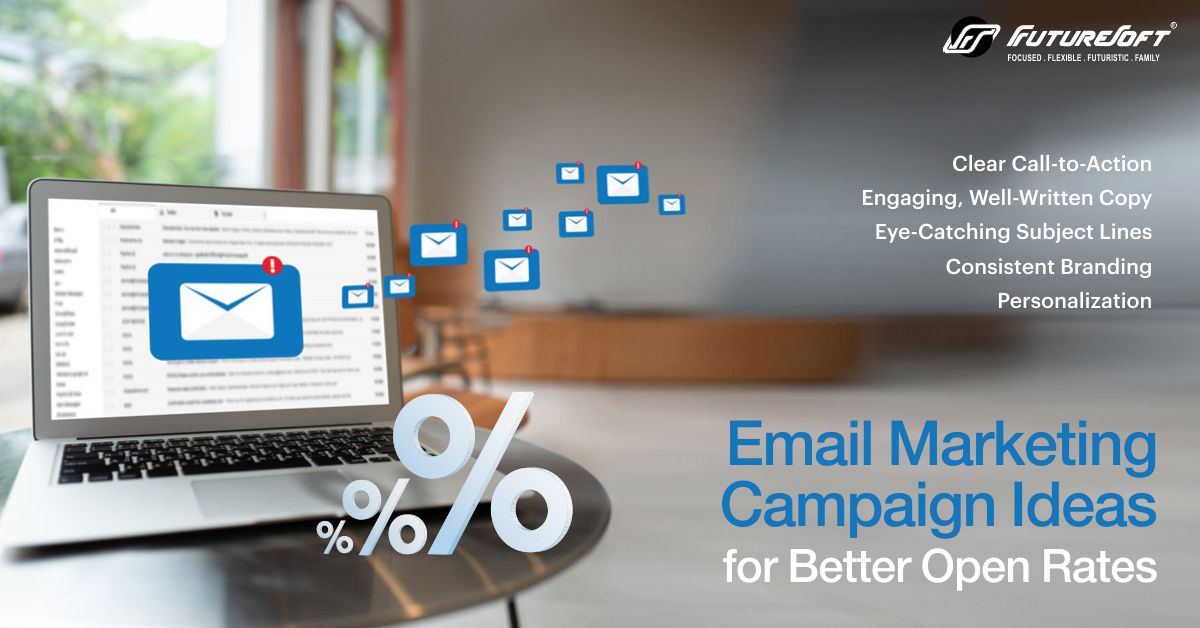
Email marketing campaigns are some of the most underrated creative and marketing ways. It improves email open rates and engagement. You will learn how different campaigns can drive awareness, conversions, and brand loyalty.
We would love to be a part of your journey to success. Let's team up today!