
Business leaders and owners want effective eCommerce marketing strategies to scale their online operations. For the time being, small steps and eCommerce growth tactics might work. However, for long-term success, they need effective strategies that can change their business completely.
This blog will do the same, discussing the top eCommerce marketing strategies along with some other relevant tips and tactics to make your business relevant for long-term sustainability and growth.
Effective eCommerce marketing starts with data. Explore strategies that turn analytics into visibility and growth outcomes.
If you run an online store or plan to launch one, eCommerce marketing strategies can make a noticeable impact on the results. Many businesses invest in digital presence and ads but still struggle with low conversion rates, wasted resources, and lost customers.
To bring clarity and help you understand eCommerce marketing, we are writing this blog. It will cover numerous topics like what eCommerce marketing is, its types, eCommerce marketing strategies, challenges, and trends to guide you through building a robust plan.
Additionally, you will discover practical hacks to boost traffic, sales, retention, and brand value: everything with measurable outcomes.
eCommerce marketing refers to a set of methods that a business uses to attract, engage, convert, and retain online shoppers. It covers different digital touchpoints like blog posts, social media, email, search engines, paid ads, marketplaces, and more.
As per a recent study by Statista, global retail eCommerce sales reached over $5.5 trillion in 2023, and the figure is predicted to rise above $8.1 trillion by 2027. This shows how massive the eCommerce opportunity is.
Learn the difference between advanced Shopify and Shopify Plus.
When you apply eCommerce marketing to your business, you tap into growth. It increases visibility, guides customers smoothly from discovery to purchase, turns first-time buyers into repeat customers, and most importantly, builds trust.
Great eCommerce marketing helps you reach the right audience, lower customer acquisition costs, increase average order value, and improve lifetime value. It converts traffic into sales rather than just clicks.
There are several kinds of marketing that come under eCommerce marketing, and you should consider them in your growth plan:
Content marketing helps create articles, guides, blog posts, product descriptions, stories, and videos that address customer questions. When a brand posts high-quality content consistently, it wins trust and attracts organic traffic.
As per research by Content Marketing Institute, content marketing generates 3 times as many leads as traditional outbound marketing while costing less than 62%. Additionally, by posting useful content, you engage customers early, when they are researching, comparing options, or seeking information. This leads to better brand recognition and smoother sales funnels.
Understand why an eCommerce website is a must for a retail business.


Social media marketing uses platforms like Facebook, Instagram, X, Pinterest, TikTok, and LinkedIn to reach and engage with your audience. Social presence helps you build brand personality, interact with customers, and promote products.
For example, Sprout Social reports that 54% of social media users research products via social platforms, and 71% say social media influences their buying decisions. That shows that social media is not just for awareness; it drives commerce.
Email marketing remains one of the most reliable channels for eCommerce marketing. It allows you to directly reach subscribers, send promotions, share updates, abandoned carts, and personalized product recommendations.
Data from Litmus indicates that eCommerce email marketing can generate an average return of $36 for every $1 spent. That makes email marketing a critical channel in any eCommerce digital marketing strategy.


Mobile marketing targets shoppers using smartphones or tablets. This indicates mobile-optimized websites, push notifications, SMS campaigns, and mobile ads. With over 55% of global eCommerce traffic coming from mobile devices, businesses that ignore mobile marketing risk losing most of their potential customers.
Mobile-friendly design, easy checkout, and fast loading times improve user experience. These lead to higher conversion rates and lower bounce rates.
SEO helps your store rank higher on search engines for queries relevant to your products. Organic traffic from search engines often delivers high-intent visitors who are ready to buy. According to Backlinko, the first five results on Google receive about 67% of all clicks. Investing in SEO gives your business long-term visibility without paying per click.


PPC advertising uses paid ads on search engines or social networks to reach potential buyers quickly. Because you pay only when someone clicks, you can tightly control your budget and target people based on demographics, interests, and behavior.
PPC is powerful when you launch a new store, promote new products, or want immediate traffic. A well-managed PPC campaign can deliver high ROI, especially when combined with conversion-optimized landing pages.
Influencer marketing involves partnering with influencers who have credibility with your target audience. When influencers promote your products, they lend their social proof to your brand. According to a report by Influencer Marketing Hub, businesses earn an average of $5.78 for every $1 spent on influencer marketing. This shows the potential of this approach when done correctly.
Know everything about Magento development.


Omnichannel marketing means presenting a unified experience to customers, whether they browse your website, social feed, email, or marketplace listing. It removes friction, builds brand coherence, and offers convenience.
Customers who interact with brands through omnichannel campaigns reportedly spend 10% more on average, compared to single-channel shoppers.
Here is a practical and tested roadmap of actions to drive growth, improve conversions, and build a strong brand.
Start by analyzing available data: traffic sources, customer behavior, conversion rates, product performance, and customer demographics. Data-driven decisions reduce guesswork. For example, if data shows mobile visits are high, but conversions are low, you may need to optimize mobile UX or speed.
SEO should be a core pillar of your eCommerce growth strategy. Conduct keyword research, optimize product pages, write assistive content, fix site speed and technical issues, and build quality backlinks. This will generate organic traffic without ongoing ad spend.
Selling on marketplaces (like Amazon, eBay, or local equivalents) helps you tap additional traffic and customers. Marketplaces often have built-in search traffic and loyal buyers. Use them to complement your own store. This helps you diversify and reach new audiences without heavy upfront marketing costs.
BigCommerce vs Wix: Understand which one is a better website builder.
Upselling or cross-selling complementary products increases average order value. For instance, if a customer buys a smartphone, you can suggest a protective case or charger. Personalized recommendations at checkout or via email can boost revenue significantly.
Brand awareness helps your business stay top-of-mind when customers are ready to buy. Use social media posts, content marketing, PR mentions, and collaborations. A strong brand motivates trust, which leads to higher conversion rates and repeat purchases.
Use social media actively to build community, share content, promote new products, and engage customers. User engagement on social platforms raises visibility and drives referral traffic. Social media also supports brand building and credibility.
Once customers make a purchase, keep them engaged via email campaigns: welcome emails, product suggestions, discount offers, and abandoned cart reminders. This channel supports revenue growth without needing new leads each time.
Invite customers to leave reviews, photos, and testimonials. UGC builds social proof and trust. Display reviews and photos on product pages and social media. Real user experiences influence buying decisions more than polished marketing messages.
Find out why Magento development is a go-to solution for eCommerce platforms.
A loyalty program helps convert one-time buyers into repeat buyers. Offer points, discounts, early access to new products, or exclusive offers. Loyal customers tend to spend more over time and refer others.
Use customer data to personalize product suggestions, offers, messaging, and content. Personalization boosts conversion and retention rates. For example, you can show recently viewed products, recommend complementary items, or send tailored emails based on purchase history.
If you serve local customers or specific regions, localize content: language, currency, delivery info, and offers. Optimize product pages with clear images, detailed descriptions, sizing or dimension guides, and honest reviews. That reduces friction and improves buyer confidence.
Bundle complementary products together at a slight discount. Bundles increase perceived value and raise order value. For example, selling a “starter kit” of three related products can drive more revenue than individual sales.
Discover how to build a scalable eCommerce ecosystem.
Video can demonstrate product usage, quality, features, and benefits. Short product demos, unboxing videos, and customer testimonials work well. Videos often convert better than text or an image alone.
Use a platform that helps manage emails, push notifications, chats, loyalty, reviews, and customer data. This gives better insights and smoother communication. A unified platform lets you respond quickly and build long-term relationships.
Affiliate marketing allows outside promoters to market your products for a commission. This expands your reach with limited upfront cost. Affiliates often bring niche audiences willing to buy.
Even with a good plan, many businesses run into challenges. Here are some problems and how they appear.
Disjointed or Fragmented DataWhen data lives in separate tools: ads dashboard, email tool, website analytics, marketplace reports, it becomes hard to see the full picture. That leads to inconsistent decisions. For example, email campaigns may push products that are out of stock or poorly priced.
Learn the best practices of Adobe eCommerce SEO.
Low Conversion Rates Despite High TrafficYou may get many visitors but few buyers. This problem often signals poor user experience, weak product pages, checkout friction, or low trust. For example, slow mobile checkouts can cause most users to abandon their carts.
One-Time Buyers Without Repeat OrdersIf most customers buy it only once, customer acquisition costs stay high. A lack of loyalty programs, weak post-purchase engagement, or generic messaging often leads to one-time sales. These challenges can stall growth and undermine marketing ROI.
Smart businesses adapt to emerging trends. Here are key developments shaping the future of eCommerce marketing strategies.
Artificial Intelligence can analyze customer behavior and preferences to deliver personalized product suggestions, dynamic pricing, and customized marketing messages. This level of personalization raises conversion, retention, and value per customer.


With more people using smart speakers and voice search on mobile, optimizing product pages and content for spoken queries, natural language will boost visibility and traffic from voice-driven search.
Know about the best Shopify development companies in India.
Buying directly within social platforms, social commerce grows rapidly. Integrating shopping into social feeds shortens the conversion path. Businesses that adopt social commerce get an early advantage.


Modern consumers value eco-friendly products and socially responsible brands. Highlighting sustainable sourcing, recycling, packaging, fair labor, or charitable efforts can attract and retain customers who care.
Subscription commerce, recurring deliveries of consumable goods, gives predictable revenue and stronger customer lifetime value. Businesses can build more stable revenue streams than one-off purchases.


Chatbots and live chat give immediate support, answer queries, help with recommendations, and guide through checkout. This reduces cart abandonment and improves user experience, especially for mobile shoppers.
How to ensure your eCommerce website security with encryption.
For your online business to succeed, you need more than products and websites. You need a strong eCommerce marketing strategy that draws people in, convinces them to buy, and brings them back.
You must combine data, good content, SEO, ads, email, and a personalized customer experience. You will face challenges.
Data may be scattered. Conversion rates may frustrate you. Customers may buy it once and vanish. But if you build a plan around the methods above, from SEO to social media to loyalty programs, you will build momentum.
If you want to grow profits, build brand trust, increase repeat purchases, and maximize customer lifetime value, ten eCommerce marketing strategies are no longer optional. It is your growth path.
Let's work together to build your eCommerce marketing plan and turn online potential into real results.
eCommerce marketing strategy refers to a plan that you put forth to get traction on your website, like traffic, leads, conversions, and visibility. It covers different digital touchpoints like blog posts, articles, social media, email, search engines, paid ads, marketplaces, and more.
The 3-3-3 rule does not have a single definition but is a versatile framework for focus. It often means 3 key messages, 3 audience segments, and 3 channels for clarity. Similarly, in outreach, it means 3 seconds to grab attention, 3 days to follow up, and 3 minutes to build value.
It uses the psychological power of three to make marketing more memorable, clear, and effective. This simplifies strategy and prevents resource dilution.
The four P’s of marketing in eCommerce or in general refer to Product, Price, Promotion, and Place. This is so because all of these are an integral part of eCommerce that drive campaigns and help in increasing conversions.
The 70-20-10 rule of digital marketing is a strategic framework for allocating resources to balance proven methods with innovation. 70% stands for core, reliable campaigns like SEO, email, and proven ads. 20% refers to developing or testing new, promising opportunities like new ad formats, influencer outreach, and 10% on experimental moonshots such as new platforms, risky content for steady growth.
The 5 C’s of eCommerce refer to a strategic framework that works around 5 key areas concerned with business success. They refer to the Company, Customers, Collaborators, Competitors, and Context (or Climate). These help a business in understanding its market position, target audience, internal strengths, and external environment to build effective digital strategies.
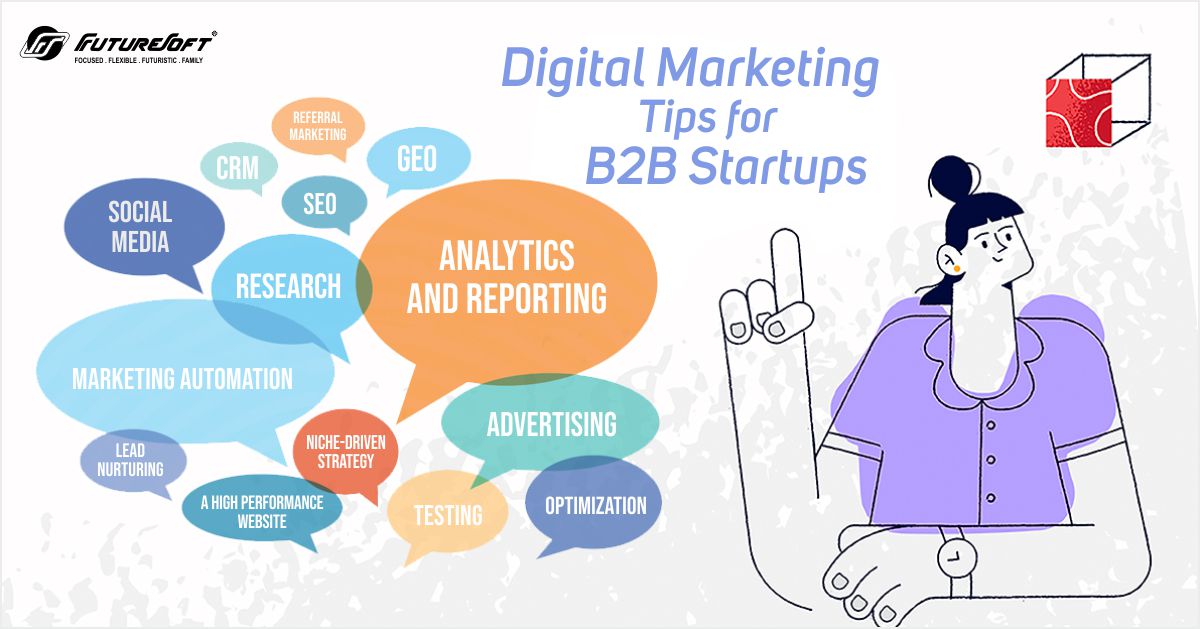
Startups need to grow faster so they can compete with existing businesses and set up their brand presence in the market. For this, they need something more than just advertising, especially in this digital-first world; they need digital marketing strategies.
Building and deploying a Magento eCommerce website doesn’t bring sales; you need to rank on the first page to get noticed. Additionally, just running ads will also not work, as it is a temporary solution. For long-term success, you need to perform Magento eCommerce SEO.

In 2025, online shoppers are more demanding than ever. Competition is fierce, algorithms keep evolving, and buyers expect fast, engaging, and personalized experiences before they even consider clicking “Add to Cart”.
We would love to be a part of your journey to success. Let's team up today!