
Why do some eCommerce websites appear at the top of the search results, while my website struggles to appear on page two? If this is a similar case to your eCommerce website, then you are in the right place.
The answer lies in your content, specifically in its connection and organization. Many businesses invest heavily in content creation but fail to see results due to weak structure and poor topical relevance.
This is where topic clusters and information architecture play a defining role. When content is scattered, search engines fail to understand authority and relevance. So, if you want a solution or want to know how to build topic clusters, join us.
Gain insights into building SEO-ready site architecture using topic clusters that improve semantic coverage, authority signals, and on-site engagement.
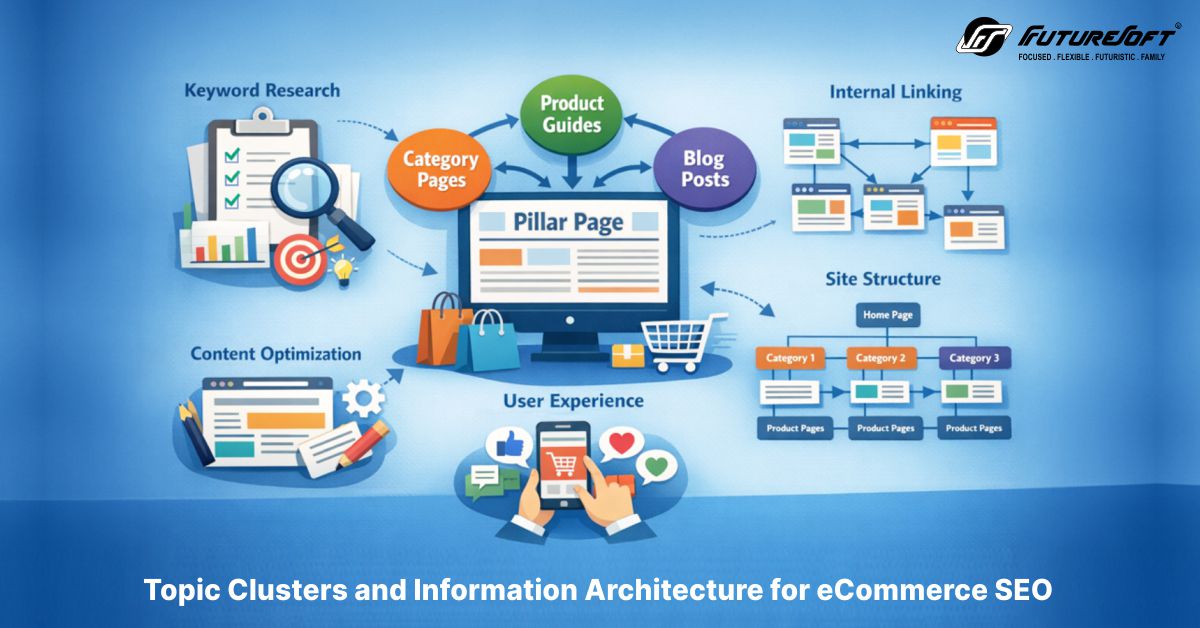
Topic cluster and eCommerce SEO are a must for your brand if you want to compete in saturated digital markets. According to Google and SEMrush research, over 68% of online experiences begin with a search engine.
Yet most eCommerce websites fail to rank due to fragmented content and weak internal structure. The challenge is not the lack of content, but the absence of a cohesive system that connects pages logically.
This blog will explain what a topic cluster is, why it matters for eCommerce SEO, and how you can design scalable information architecture that supports growth, authority, and conversion. You will also learn practical frameworks, real examples, and best SEO strategy principles aligned with EEAT and modern search behavior.
A topic cluster is a content framework where a central pillar page covers a broad topic, while multiple supporting pages address related subtopics in depth. These topic clusters pages link back to the pillar page and to each other where relevant.
This structure helps search engines understand topical authority. For example, an eCommerce brand selling fashion accessories may create a pillar page on eCommerce SEO.
Supporting cluster pages could focus on product page optimization, category page structure, technical SEO for eCommerce, and content optimization for collections. Together, these pages form a strong topical ecosystem.
Topic clusters shift SEO for eCommerce website efforts from keyword chasing to authority building.
Topic clusters help search engines map content relationships clearly. When pages support one another, rankings improve across multiple related queries rather than a single keyword. This approach supports long term visibility and reduces dependency on paid traffic.


Search algorithms favor websites that demonstrate topical expertise. Topic clusters reinforce semantic relevance, which directly impacts rankings. This is a core component of any best SEO strategy focused on sustainable growth.
Users land on pages that guide them naturally to related content. Bounce rates reduce, session duration improves, and conversion paths become clearer. This experience supports both SEO for eCommerce website performance and revenue goals.


Internal links within topic clusters pass contextual relevance and authority efficiently. This supports faster indexing and better ranking distribution across important commercial pages.
As supporting pages gain traction, authority flows back to the pillar page. Over time, this elevates the overall domain strength, which benefits category pages, product pages, and future content.

Building topic clusters for eCommerce SEO is a structured, data-led process that aligns business goals with how search engines interpret relevance and authority. This section breaks down each step in greater depth, so decision makers can see how clusters directly support traffic growth, lead quality, and scalability.
Learn everything about ChatGPT.

Google Search Console provides first-party data that reflects how search engines already perceive your website. Queries with deep impressions, but low clicks often indicate content that lacks depth or structural support.
These queries can be grouped into themes to identify potential pillar topics and supporting clusters. This approach reduces guesswork and aligns content creation with existing visibility. Search Console data also reveals seasonal trends and emerging queries.
These insights help businesses plan topic clusters that remain relevant during peak demand periods, which is critical for eCommerce SEO performance.
Seed topics form the foundation of topic clusters. They should represent board commercial themes directly tied to products, services, or platform capabilities. For eCommerce brands, strong seed topics often include eCommerce SEO, platform optimization, conversion optimization, and catalog management.
Validation happens through search volume trends, competitive analysis, and alignment with buyer intent. A seed topic must support both informational discovery and commercial decision-making to justify investment.


Search engine reveals topic relationships through “People Also Ask” results, related searches, and autocomplete suggestions. These elements show how users naturally explore a topic. Mapping these relationships helps define cluster pages that answer real questions while reinforcing topical depth.
Competitor analysis also plays a role. Reviewing how high-ranking competitors structure their content reveals gaps and opportunities that can be addressed through stronger topic clusters.
A pillar page acts as a central reference point for a topic. It should cover the subject comprehensively without going too deep into subtopics. Clear sections, scannable layouts, and contextual internal links improve usability and crawlability.
For eCommerce SEO, pillar pages often target competitive queries and attract backlinks. Over time, this authority supports category pages and commercial content across the site.
Find out ways to increase the website conversion rate.


Cluster pages should address one specific subtopic or question in depth. Each page supports the pillar while serving a distinct search intent. Internal links must be contextual and relevant. This guide users logically through the content ecosystem.
As these pages gain traction, authority flows back to the pillar page, strengthening the overall topic cluster and improving ranking stability across related queries. Cluster pages dive deeper into specific subtopics.
Every page targets a focused intent and links back to the pillar. Over time, this structure strengthens topical authority and supports best local SEO and global visibility alike.
The advantages of incorporating a 3D product visualizer on your eCommerce website are substantial and provide immediate and long-term gains for your business.
Information architecture refers to the organization of a page's links, headings, and prioritization of content. For large eCommerce websites, poor structure leads to crawl waste, ranking dilution, and poor user journeys.
Strong architecture supports topic clusters and improves SEO for eCommerce website's performance.
Understand the advantages of using content management systems for web development.
Category pages should target commercial intent. Blog and resource pages should support informational intent. Topic clusters help bridge these intents naturally, improving conversion-assisted traffic.
Clean, descriptive URLs and consistent navigation help both users and search engines. This clarity supports the best local SEO for region-specific pages and improves crawl efficiency.
A strong eCommerce SEO strategy depends not just on content volume, but also on relevance. It requires discipline, consistency, and alignment with how modern search engines evaluate quality and relevance.
Experience, expertise, authority, and trustworthiness influence how search engines assess credibility. For eCommerce websites, this includes clear business information, expert-authored content, accurate product data, and transparent policies.
Topic clusters make EEAT signals easier to establish by demonstrating depth across related subjects rather than isolated content pieces.
Core SEO elements such as headings, metadata, internal links, and content hierarchy still matter. When these basics are applied consistently across topic clusters, they amplify results rather than working in isolation.
This disciplined approach supports SEO for eCommerce website scalability and reduces performance volatility during algorithm updates.
Search engines use AI models to understand context, relationships, and intent. Topic clusters align naturally with this interpretation by reinforcing semantic connections between pages. This structure improves eligibility for rich results, featured snippets, and generative search responses.
Businesses that align content architecture with AI-driven interpretation gain long-term visibility advantages.
Know how to optimize your eCommerce product pages for higher conversion.
Mobile-first indexing means content must perform well on smaller screens. Clear navigation, readable layouts, and logical internal links improve engagement and reduce friction.
Well-designed information architecture supports mobile users by reducing depth and helping them reach relevant content quickly, which benefits both rankings and conversions.
Most eCommerce traffic is mobile-driven. Content layout, navigation, and internal linking must support mobile usability. Strong information architecture improves engagement and conversion on smaller screens.
Topic clusters support more than rankings. They attract qualified traffic, support buying decisions, and reduce dependency on ads. For companies planning website development, upgrade, or migration, this approach future-proofs SEO investments.
Brands using topic clusters consistently outperform competitors relying on isolated content. This advantage compounds over time and supports the best SEO marketing and best local SEO initiatives together.
Discover 7 tools to skyrocket the conversion of your D2C brand.
Topic clusters transform how eCommerce websites build authority, traffic, and trust. By aligning content with search intent and strong information architecture, businesses create clarity for both users and search engines.
This approach supports long term growth, higher rankings, and better conversion paths. For organizations seeking digital marketing services and search engine optimization support, topic clusters provide a scalable framework that drives leads and revenue.
When executed correctly, they become the foundation of a resilient eCommerce SEO strategy.
Creating a topic cluster for your SEO can be divided into several steps, such as:
To know more, read the entire blog for all the details.
The main components of a topic cluster are:
Topic cluster refers to a content strategy where you create a central “Pillar” page that covers a broad subject and links several specific sub-pages, “clusters” pages that delve into related subtopics. It interconnects a web of content that improves your SEO, page and domain authority, user experience, and demonstrates your authority to search engines.
Keywords are the list of strategically targeted terms that a user searched through a search engine to get relevant information related to them. On the other hand, topic cluster is a strategic approach which created intent pathways, which are exactly what Google uses to identify hierarchy and authority with clusters.
The key purpose of a topic cluster is to act as a hub. It is also called a pillar, hub, or topic cluster. It serves as the central page and builds its ranking potential by supporting the related subpages.

Email marketing campaigns are some of the most underrated creative and marketing ways. It improves email open rates and engagement. You will learn how different campaigns can drive awareness, conversions, and brand loyalty.

In the present times, data is a necessity. Every business, even an eCommerce needs data for understanding users and uncovering hidden insights. eCommerce analytics make informed decisions and accelerate growth.
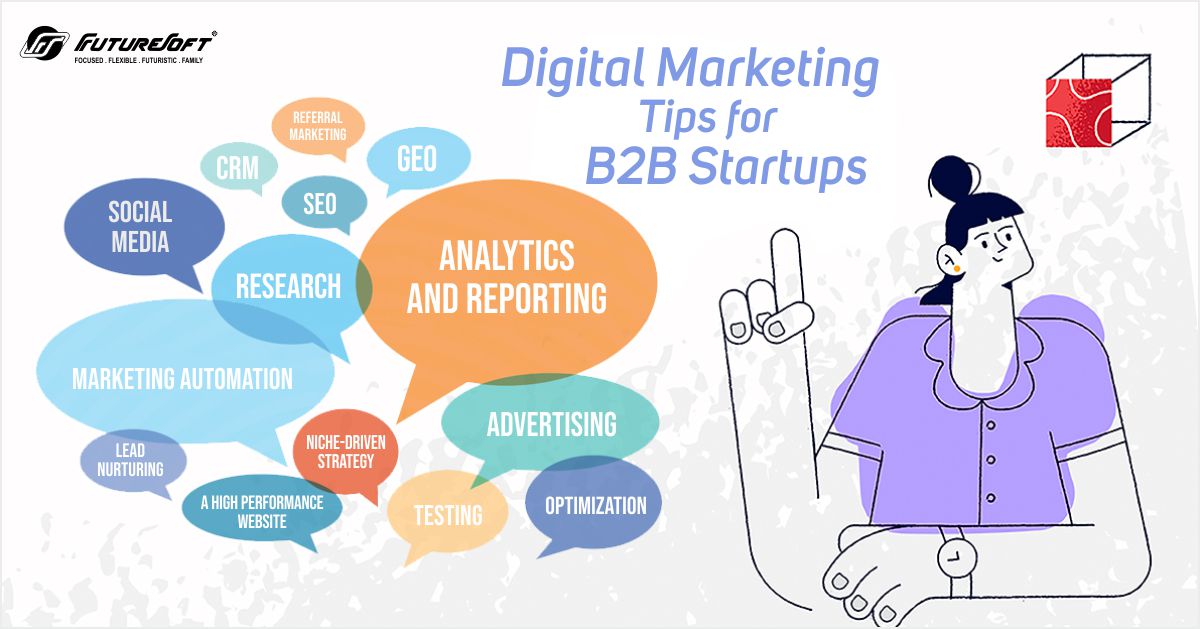
Startups need to grow faster so they can compete with existing businesses and set up their brand presence in the market. For this, they need something more than just advertising, especially in this digital-first world; they need digital marketing strategies.
We would love to be a part of your journey to success. Let's team up today!