
Over the past decade, the automotive industry has undergone a significant transformation, driven by rapid technological advancements and changing customer behaviour. The rise of digitalisation and eCommerce platforms has shifted the industry from traditional dealership-led models toward more digital-first experiences. Earlier defined by in-person interactions, test drives, and showroom visits, the buying process for automobiles, auto parts, and accessories has evolved considerably.
Learn how AI is influencing the future of digital marketing by enabling faster decisions, smarter personalization, and outcome-focused strategies.
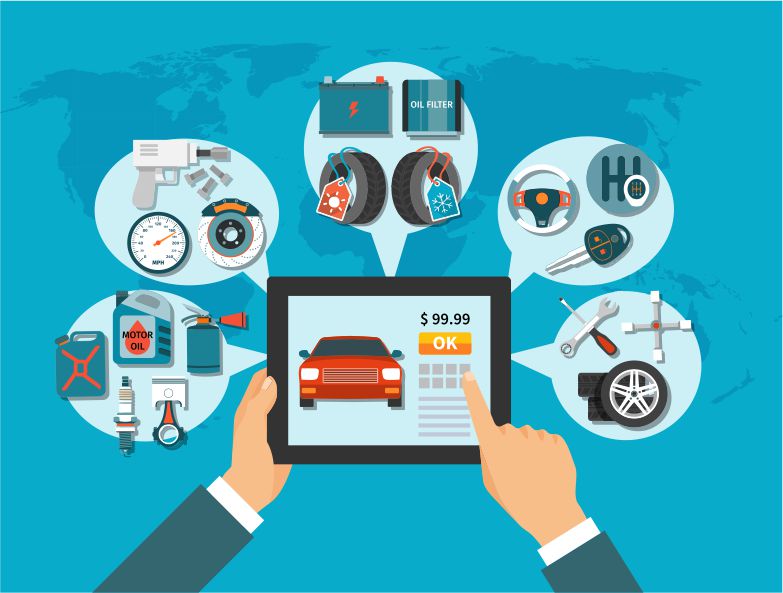
The automotive industry has undergone a remarkable transformation over the past decade. They are constantly evolving to adapt to the rapidly changing customer behaviour and technological advancements. This shift has been induced by several factors, which include the digitalisation surge and the increase in eCommerce platforms.
This era of change in the automotive sector is finding itself at the intersection of tradition and innovation, and nowhere is more clear than in eCommerce. Traditionally, the industry has been characterised by dealerships, test drives, displays, and interaction between customers and salespersons.
However, the last decade has seen significant changes from this model. Technological advancement and shifting customer preferences have led to a notable evolution in the buying process of automobiles, auto parts, and accessories. The industry has had to keep pace with the changes to remain relevant and competitive.
COVID-19 has been the catalyst for this change and acceleration of the adoption of eCommerce within the automotive sector. The pandemic compelled the manufacturer and dealers to explore ways to reach customers. The crisis highlighted the need for a robust online presence, which pushes the industry to computerise processes and enhance virtual customer experiences.
Even after COVID, these adoptions are proven to be a worthy option to see value in convenience and efficiency. E-commerce helped the industry sustain through the COVID-19 phase and even aided it in transforming the landscape of the automotive and aftermarket industry. This shift streamlined several processes across the industry and contributed to reshaping user behaviour.
The industry embraced the eCommerce to represent a transformative journey. It reflects a journey that extends to a broader cultural shift in how consumers engage with products and services. This change pushes the eCommerce for auto parts, which is a cornerstone of operations.
Automotive eCommerce encompasses numerous online activities within the eCommerce for auto parts. Virtual showrooms help customers explore models, compare specifications, and even take virtual test drives through automotive eCommerce. Additionally, eCommerce for auto parts or aftermarket accessories is conveniently available to customers. This transformative approach extends to services, allowing users to schedule repairs and maintenance through user-friendly online platforms.
Now, the automotive eCommerce offers unparalleled convenience and accessibility to customers. Customers can now explore options without geographical constraints at their disposal. eCommerce for auto parts signifies the shift towards user-centric experiences that empower buyers with information and choices. Moreover, eCommerce for auto parts connects customers directly with suppliers and enhances the efficiency of the supply chain.
Know which one is the best eCommerce website builder: BigCommerce or Wix.
Automotive eCommerce opens new prospects for businesses to reach a broader audience. It simplifies operations, reduces overhead costs, and facilitates targeted marketing strategies. Further, the automotive aftermarket or eCommerce for auto parts has also experienced a surge in online transactions as customers turn to eCommerce platforms for replacement parts and accessories.
According to the market surge and growth in the recent past, the automotive eCommerce and aftermarket are predicted to see a substantial increase.
Automotive eCommerce offers several advantages to businesses. You can reach a broader market, reduce operational costs, and simplify the supply chains. Fuelled by online transactions, the automotive aftermarket saw significant growth. The transition from offline to online accelerated the industry into a future where accessibility, efficiency, and choices redefine the automotive experience.

The most significant advantage of automotive eCommerce is the eradication of geographical boundaries. Traditionally, you need to be physically present at the store to purchase the car or auto parts, which limits choices based on availability. With automotive eCommerce, the entire marketplace becomes accessible at the click of a button.
It allows customers to explore a global inventory, compare prices and specifications, and review, making informed decisions without being bound by location. It assists in expanding the business reach and allows customers unparalleled choice and flexibility.
The shift of businesses towards automotive eCommerce has introduced cost efficiency on multiple fronts. A physical showroom incurs many overhead costs, from maintenance to staffing. With the aid of digital storefronts, businesses can reduce these expenses significantly. In addition, the simplified supply chain leads to improved inventory management, reducing storage costs, and cutting down overstocking risk.
Cot-effectiveness helps enhance profits and allows businesses to offer competitive pricing to attract a large customer base.


Automotive eCommerce advantages extend beyond immediate monetary gains. The digital landscape offers businesses a tool to enhance customer trust, a crucial aspect of the automotive industry. Transactional transparency, detailed product information, and customer reviews contribute to building a trustworthy online presence.
When customers experience perfect transactions and receive quality products, their trust in the brand and its online presence increases. It fosters customer loyalty, which increases profits through repeat business and positive word-of-mouth referrals.
Automotive eCommerce is not just about the present, it's an investment in the brand’s future. The digital realm permits businesses to create enticing online experiences that shape their brand image in the minds of consumers. Engaging content, interactive features, and personalised marketing strategies contribute to establishing a brand’s digital identity.
Businesses with a progressive and updating mindset use this platform not only for sales but also for storytelling. It helps position them for long-term success in an increasingly digitalised automotive landscape.
Learn how to increase online sales by growing cart value.


The automotive eCommerce shift brings forth a new era of personalised customer experience. The advanced algorithms and data analytics enable businesses to understand customer preferences, offering tailored recommendations and targeted promotions.
From suggesting compatible auto parts to custom marketing messages based on individual preferences, automotive eCommerce enhances the overall customer experience. It fosters customer satisfaction and develops brand loyalty, acting as an asset in the competitive market.
In this interconnected digital age, having an omnichannel presence is imperative for businesses. Automotive eCommerce smoothly integrates with various channels, which includes social media platforms and mobile apps, while ensuring a complete brand experience across all touchpoints.
Additionally, the connectedness enhances brand visibility and provides customers with multiple ways to engage with the brand. Whether it is a website, mobile app, or advice on social media, businesses with a robust automotive eCommerce presence can meet customers wherever they are in the digital landscape.
Know the top eCommerce SEO strategies to boost organic traffic.

The most evolutionary advantage of eCommerce for auto parts is the ability to expand the customer base. The digital presence has helped businesses reach a global market. The addition of eCommerce for auto parts allows you to sell automobiles and replacement parts and accessories.
The auto parts industry allows you to tap into a vast pool of consumers who seek specific products. Customer base expansion drives more sales for the business and positions it for sustained growth and sturdiness in an ever-changing market.
In the dynamic landscape of automotive eCommerce, the key to sustained success lies in a strategic approach to boost sales. With automotive eCommerce, businesses can employ different tactics to enhance visibility, engage customers, and drive conversions. Let’s explore some of the benefits of rev up automotive eCommerce sales.
Find out the key features to have on your furniture eCommerce website.
A robust online presence begins with organic traffic, and blogs are a powerful way to get it. By consistently publishing high-quality, relevant content about the automotive industry, businesses can establish themselves as the industry’s top experts while improving search engine rankings. Search Engine Optimisation plays a crucial role in driving organic traffic.
It helps incorporate relevant keywords strategically in website content, product descriptions, and blog posts to improve page visibility. Blog like the latest trends, maintenance tips, product reviews, best cars, and more that help attract an audience and boost organic traffic.


Social media is now part of everyday life, and you can harness the potential of social media is non-negotiable. Facebook, Instagram, Twitter, and LinkedIn provide a direct channel to engage with potential customers. Creating visually appealing content, sharing product updates, and running targeted ad campaigns can increase your reach.
Using social media means broadcasting promotional content and building a community. By human-generated content, participate in conversations, and highlight the human side of the business. Also, you need to add some keywords related to your industry to enhance the content’s discoverability.
Digital advertising is a powerful tool that can drive targeted traffic and boost sales but with strategic use. Campaigns like PPC on platforms like Google Ads allow businesses to reach potential customers actively searching for relevant products. Engaging visuals, compelling ad copy, and adding correct keywords can help them increase visibility.
Reinforce brand presence and encourage conversion by remarketing ads to help target users who have previously visited the website. Additionally, the automotive aftermarket segment can benefit from targeted ads promoting specific products or highlighting promotions. It captures the attention of customers looking for replacement parts and accessories.
Understand the things you need to start a clothing eCommerce website on Shopify.


Expanding automotive eCommerce also means integrating online marketplaces. Etsy, eBay, and Amazon serve as high-traffic marketplaces where you can highlight your products to a broader audience. It enhances visibility and builds credibility as customers trust these marketplaces.
A strategic approach in product listings ensures that the products are discoverable by users searching for specific items. Marketplace integration is beneficial because it can help you with eCommerce for auto parts, as it provides a dedicated space to display a wide range of products to a diverse customer base.
It is an undeniable fact that online reviews and ratings act as word of mouth. Customer reviews and ratings serve as a powerful endorsement that influences purchasing decisions. Actively encouraging customers to leave reviews and ratings helps a lot.
Highlighting positive reviews and addressing any negative feedback to demonstrate commitment to customer satisfaction. Additionally, these reviews help strengthen the connection between satisfied customers and the brand.


Virtual showroom experience brings in-person dealership experience into the digital realm. With advanced technologies like augmented reality (AR) and virtual reality (VR), you can create immersive online experiences. Virtual showrooms allow users to explore vehicles, inspect auto parts, and visualise accessories in a simulated environment.
It enhances the customer experience and builds confidence in their online purchases. Also, businesses can integrate keywords strategically in virtual showroom descriptions and product displays to improve search engine ranking and attract users searching for specific automotive products.
The automotive industry’s shift to eCommerce marks a major transition driven by changing customer behaviour, technological advancement, and automation.
Moving beyond traditional showrooms, the industry has embraced digital platforms as a core operational channel. Automotive eCommerce is no longer a temporary solution but a strategic, long-term adaptation that simplifies processes, improves virtual experiences, and reshapes how customers engage with vehicles and auto parts.
This cultural shift is redefining efficiency, accessibility, and choice, that position automotive and auto parts business for sustained growth in an increasingly connected digital landscape.
If you have any other queries about the automotive eCommerce or auto parts market, or want to explore the possibilities of automotive development, email us at sales@futuresofindia.com.
The automotive e-commerce market is growing rapidly. According to data, in 2024, the global automotive e-commerce market was valued at roughly $100 billion. It is expected to rise to $343 billion by 2032, expanding at a CAGR of around 16.7%.
This pace highlights the increasing consumer preference for online research and purchasing. Emerging markets are also contributing significantly, as internet penetration and mobile commerce are on the rise.
The automotive e-commerce market is expanding rapidly, but there are certain challenges, such as:
Besides this, scaling e-commerce in the automotive industry while maintaining a consistent customer experience across regions is a key hurdle. Hence, overcoming these challenges requires investment in technology, data accuracy, and omnichannel capabilities.
e-commerce for automotive allows manufacturers and dealers to reach customers directly, along with reducing dependency on physical showrooms and lowering operational costs.
It provides you with valuable customer data, personalised offers, targeting marketing to permit better demand forecasting. Within the automotive e-commerce market, digital platforms also streamline inventory management and shorten sales cycles.
E-commerce for the automotive industry allows manufacturers and dealers to build stronger customer relationships by offering transparent pricing, flexible buying options, and smooth digital experiences.
The key trends that are shaping e-commerce for the automotive industry are:
As the automotive e-commerce market is evolving, businesses are getting engaged in more user-friendly technologies like omnichannel presence that unifies online and offline touchpoints.
e-commerce for the automotive industry is majorly driven by data and customer-centric journeys.
eCommerce for the automotive industry removes geographical barriers, letting you reach customers beyond local markets. With the help of an eCommerce website, you can showcase your products globally, while offering localised pricing and cross-border transactions.
This helps the automotive e-commerce industry to expand its reach, especially in the aftermarket segment. It helps in global expansion and building your brand and product demand in the market.

Explore the future of eyewear shopping with our detailed guide to the top 10 eyewear eCommerce websites. Discover how advanced features like virtual try-ons, personalized recommendations, and advanced search capabilities boost the online shopping experience.

From virtual try-on and 3D product configurators to sustainable practices, these sites offer invaluable inspiration. By incorporating these elements into your jewelry website design, you can attract and retain customers in the dynamic digital marketplace.

Exploring the web of eCommerce solutions, we came across a variety of Shopify stores that have utilized the platform in a way that they can be in the list of best sportswear websites. This blog explores the importance of utilizing Shopify stores to build powerful, user-friendly sportswear websites.
We would love to be a part of your journey to success. Let's team up today!