
Patients today expect faster access to doctors, digital prescriptions, and medical support directly from their phones. Many hospitals and healthcare providers still rely on fragmented legacy systems that create delays, miscommunication, and poor patient experiences.
This creates a gap and a key challenge for those healthcare organizations that want to provide convenient care while managing operations efficiently. A modern healthcare mobile solution solves this problem. It connects patients, doctors, and medical data in one place.
With the right healthcare app development services, organizations can deploy powerful digital platforms that enhance accessibility, support remote care, and help medical professionals deliver faster and more accurate treatment.
Build a powerful healthcare app with a step-by-step guide covering features, compliance, and development strategies to improve patient engagement and drive business growth.
The healthcare market is expanding rapidly and has reached $288.55 billion in 2024. The industry is estimated to exceed $660 billion by 2030. It is growing at a CAGR of 14.8%. This expansion is powered by mobile technologies and telemedicine adoption by patients.
Mobile solutions are at the top of this healthcare investment, as patients now prefer to access services from their smartphones. A perfectly built healthcare app helps hospitals, clinics, and medical startups in fulfilling customers' requirements.
In this blog, you will learn what a healthcare app is, its importance, and the features that are a must for a successful healthcare app development project.
Study about the mobile app development process.
A healthcare mobile app is a digital platform that allows patients, doctors, hospitals, and healthcare providers to interact with a smartphone or tablet. These apps offer services such as virtual consultations, prescription management, appointment booking, and many related features.
Healthcare application demand is rising because people want convenience and instant access to medical support without standing in long queues for hours.
Several factors contribute to the growth of healthcare apps:
Businesses that are investing in healthcare app development can offer modern healthcare experiences through custom healthcare app development and advanced mobile app development strategies.
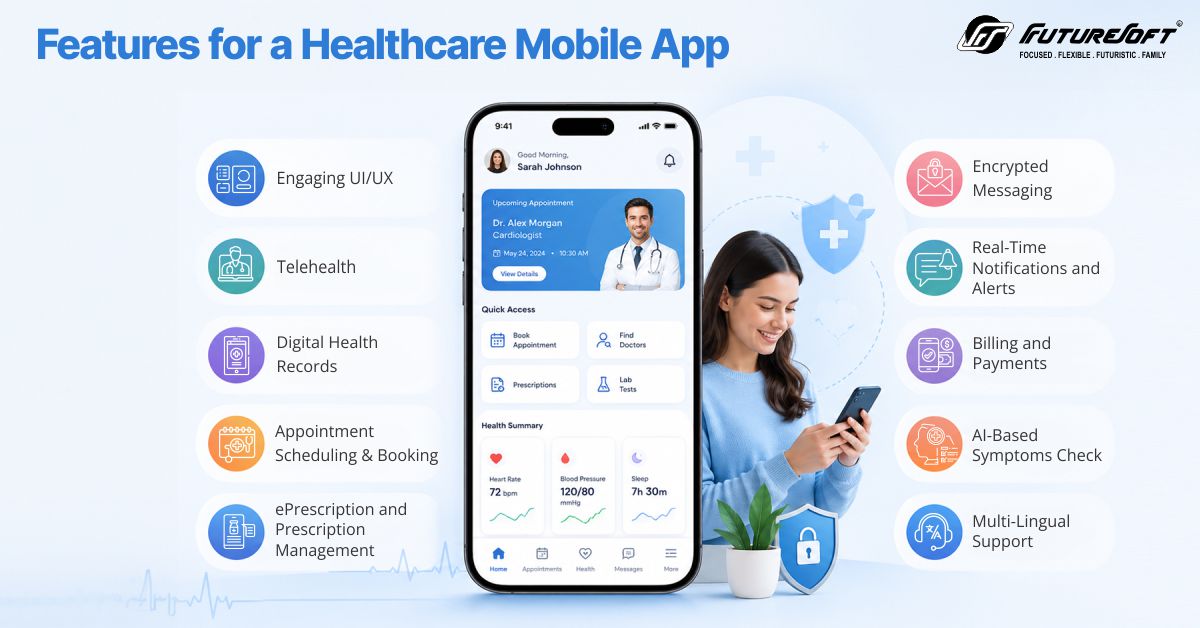
To build a successful healthcare mobile application, you must have the following features that benefit both patients and healthcare professionals. The key ones are:
The first interaction of a user with an app is its UI, and the placement of every element on the page is its UX. When combined, they make the user experience more intuitive. The interface should be easy, so patients of all age groups are able to navigate the healthcare app smoothly.
Good UI and UX help users to:
High usability is a key focus in healthcare app development services, as these apps must function smoothly for everyone.


Telehealth features allow patients to consult with a doctor through video calls or chat. It helps them get professional healthcare consultant advice at their fingertips. By adding features like screen recording or AI-based summaries post consultation, you can further enhance this functionality.
The major benefits of this feature are:
Telehealth has become a core feature of the modern healthcare app environment because it increases access to healthcare services.
Know which one is better: Native app or Hybrid app.
This feature enables patients to manage their prescriptions, test results, previous reports, medical history, procedures, and other relevant information. These records help doctors determine your correct condition before proceeding with medication or any medical procedure.
With AI, you can enhance this feature by letting it analyse and summarize all the relevant details accurately, saving time in deciding the right treatment for the patient. A healthcare mobile app with a digital health records feature improves efficiency across healthcare systems.
Digital Health Records advantages include:


In the present times, patients prefer online appointment booking. This allows them to schedule their appointment according to their and the doctor’s availability to save time. It reduces waiting time and the crowd within the hospital or health center.
Many organizations invest in healthcare app development services to create smart scheduling systems that reduce administrative workload.
This feature allows users to:
Discover which one is best for business: PWA app or Mobile App.
This sustainable feature reduces paper usage and lets patients access all their prescriptions digitally. The doctor sends them directly through the healthcare application, which they can use to get their medication. It also ensures safety and protects the information for everyone.
Benefits of ePrescriptions include


The chat between a doctor and patient is confidential, so to maintain that confidentiality, encrypted messaging is necessary. This helps patients feel secure and share their problems without hesitation. It protects their sensitive data and maintains privacy compliance as well.
Encrypted messaging is necessary in healthcare app development because it permits patients to clarify doubts and chat freely without booking a full consultation.
Its benefits include:
Learn what eCommerce automation is and how it helps websites.
The healthcare app notification keeps patients informed. It minimizes manual communication for healthcare providers.
Notification help with:

Integrated payment systems permit patients to pay upfront for consultation through the healthcare mobile app. This feature lets them pay in advance, so they don’t have to stand in a queue to make the consultation payment.
The system also generates its invoice based on the provided billing information and links it to the consultation details, speeding up the process even further and improving healthcare service efficiency. The system can generate invoices for undergoing treatments or procedures, allowing patients to track and pay pending balances.
You can further streamline this feature by integrating it with the insurance claim process.
Key benefits include:
Find out how to create a conversion-driven email campaign.
The system has a database of every disease, symptom, and treatment. You can further improve this feature with the help of an AI chatbot. It can interact with patients to know their symptoms and thus recommend possible diseases, treatments, or tests to the doctors for diagnosis.
The AI also saves doctors time in analyzing. Many companies include this feature during custom healthcare app development.

IFor compliance reasons and user data protection, this feature has become a necessity for healthcare applications. Information confidentiality is another reason for implementing it.
Security features include:
A healthcare application should support multiple languages, especially the regional ones. The availability of content in multiple languages allows patients to easily access all the services. This feature also improves patient engagement and increases accessibility.
This adds value for:


There are three sides to the dashboard.
Each of these dashboards can have a distinct display of information as per your requirements.
Nowadays, many users wear smartwatches, fitness bands, and health sensors to collect health-related insights. Integration with a healthcare app allows it to continuously track patients’ health. This provides doctors with a more accurate view of patient health so they can provide accurate recommendations.
This feature is valuable because:


Electronic Health Record integration connects the hospital databases with the healthcare application. This feature allows doctors to access patient data instantly and improves diagnostic accuracy. The EHR allows consistent access to patient information, prescriptions, and clinical processes.
Hospitals can manage staff schedules, roles, and availability through the healthcare mobile app.
Its benefits include:


A healthcare mobile app has a database of every medicine. This let doctors and patients access drug information, such as dosage, interactions, and warnings. It enhances medication safety and helps doctors prescribe the correct medicine and dosage.
Understand how to leverage Gen AI for content creation.
Advanced healthcare apps support image recognition technology. Doctors can analyze images, such as skin conditions or medical scans. This technology supports faster diagnosis and improves decision-making.


Healthcare professionals need access to updated medical knowledge. This feature benefits doctors and healthcare students.
A Healthcare app can provide:
Many successful healthcare platforms already provide these features and demonstrate the value of healthcare app development services.
Below are some popular examples
Medscape provides medical news, drug references, and clinical tools for healthcare professionals. It is widely used by doctors for research and medical updates.
Discover how to build a scalable eCommerce ecosystem.
Key features:
Rating: around 4.6 on app stores.
Epocrates is a trusted medical reference platform used by physicians for drug information and clinical decision support.
Benefits include:
It remains one of the most reliable tools for medical professionals.
UpToDate provides evidence-based medical knowledge for doctors.
Doctors use it to access research-backed treatment recommendations and clinical guidance. Hospitals worldwide rely on this platform.
Apollo 24x7 offers online consultations, diagnostic tests, and medicine delivery.
Patients can:
The app has millions of users in India.
Practo connects patients with doctors for consultations and appointment booking.
Features include:
It is widely used in India and Southeast Asia.
Know the top digital marketing tips for B2B startups.
Tata 1mg offers online medicine ordering, lab tests, and health advice. The platform simplifies healthcare access for patients across India.
VisualDX helps doctors identify diseases using visual references and diagnostic data. It supports dermatology and infectious disease diagnosis.
CrelioHealth provides laboratory management tools and diagnostic data solutions. Hospitals and labs use it to manage reports, patients, and workflows efficiently.
Lexicomp offers a comprehensive drug database with clinical insights. Healthcare professionals rely on it for safe medication management.
Study the top traffic generation strategies for Shopify.
Healthcare technology is transforming how patients and medical professionals interact. A well-designed healthcare mobile app enhances accessibility, speeds up medical services, and supports better healthcare delivery.
Organizations that invest in healthcare app development gain a competitive advantage by offering digital healthcare experiences that patients value. With features such as telemedicine, digital records, AI-based diagnosis, and wearable integration, a modern healthcare application becomes an essential tool for hospitals and startups.
Partnering with experienced healthcare app development services providers allows businesses to build scalable solutions through advanced mobile app development strategies.
As the healthcare industry continues to digitize, building a powerful healthcare app can unlock new opportunities for innovation, better patient care, and long-term business growth.
A. A modern healthcare app should include telemedicine consultations, appointment scheduling, digital health records, ePrescription management, secure messaging, and real-time notifications. AI-based symptom checkers, wearable device integration, and payment systems also improve usability.
These capabilities help hospitals deliver faster care and better patient engagement. During healthcare app development, businesses often focus on user-friendly design, data protection, and EHR integration.
Reliable healthcare app development services help organizations build a scalable healthcare mobile app that supports both patients and medical professionals efficiently.
A. Telemedicine allows patients to consult doctors remotely through video calls or messaging inside a healthcare mobile app. It reduces hospital visits, saves time, and increases access to healthcare services for patients in remote locations.
For providers, it improves patient management and expands service reach. Because of these advantages, telemedicine has become a core feature in modern healthcare app development.
Businesses investing in a healthcare application often prioritize telemedicine to deliver faster consultations and improve overall patient satisfaction.
A. A healthcare application must include strong data protection measures because it stores sensitive medical information. Key security features include end-to-end encryption, secure authentication, role-based access control, and encrypted databases.
Regular security audits and compliance with medical data standards also protect patient information. During healthcare app development, developers integrate secure APIs and protected cloud storage.
These safeguards help a healthcare app maintain patient trust while supporting safe communication between doctors and patients within the healthcare mobile app.
A. AI-powered symptom checkers analyze patient inputs such as symptoms, medical history, and health data to suggest possible conditions. This helps patients understand their health concerns before consulting a doctor.
In a healthcare mobile app, AI tools can guide users toward the right specialist and reduce unnecessary hospital visits. Many organizations include this feature during healthcare app development to improve early diagnosis and patient engagement.
A smart healthcare application with AI support can enhance efficiency and assist doctors in making quicker medical decisions.
A. AI integration can significantly improve ROI in a healthcare app by automating diagnostics, patient triage, appointment scheduling, and health monitoring. AI reduces operational workload and improves service efficiency.
Predictive analytics can also identify patient needs and optimize healthcare delivery. Businesses investing in healthcare app development services use AI to enhance patient engagement and reduce operational costs.
A well-designed healthcare mobile app with intelligent automation attracts more users and increases long-term revenue opportunities for healthcare.
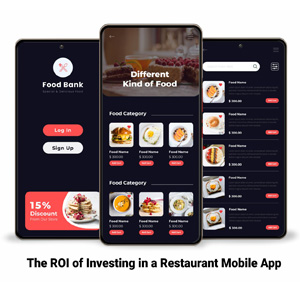
The digital landscape has turned smartphones into an integral part of our lives. Restaurants are increasingly recognizing the importance of mobile apps as a powerful tool for business growth and customer engagement
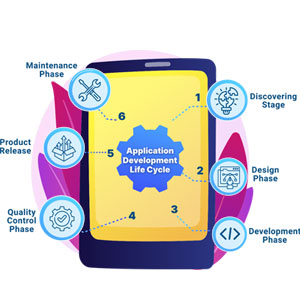
Application development is crucial, and even more imperative when you are operating a business and expecting a pipeline of great projects and revenue. Almost every successful business today is having an application.

The digital landscape is shifting under our feet. By 2026, global mobile app revenue is projected to surpass $935 billion (Source: Statista), yet the competition has never been fiercer.
We would love to be a part of your journey to success. Let's team up today!