
API Design & Integration
Enterprise Application Engineering

API Design & Integration

Design APIs as durable enterprise products—not one-off connections.

FutureSoft designs, builds, secures and integrates APIs that expose application capabilities clearly, support reliable partner connectivity and remain governable as systems evolve.

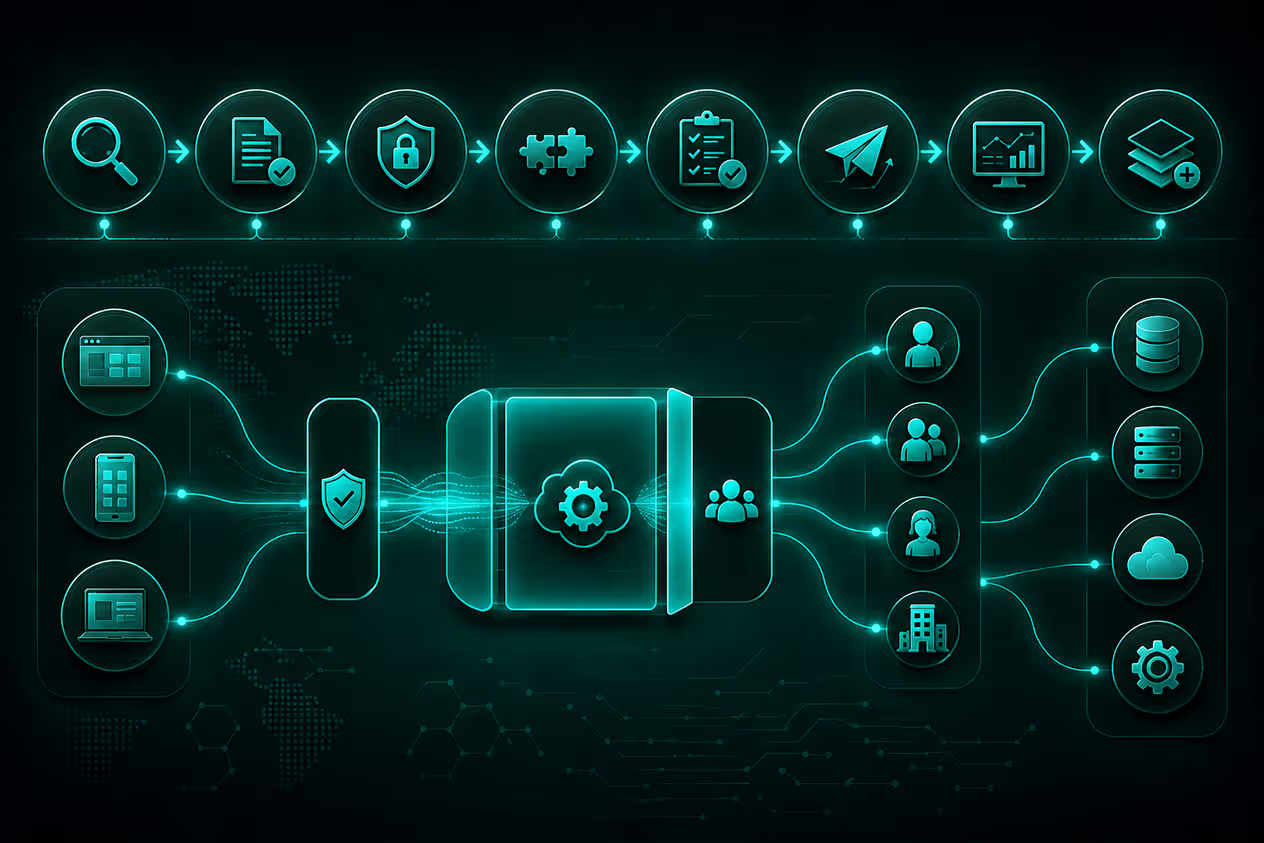
API services

  • API discovery and domain mapping
  • Contract-first API design
  • REST interfaces
  • GraphQL where it provides clear value
  • Webhooks and asynchronous event interfaces
  • API implementation
  • Third-party API integration
  • Gateway and policy configuration
  • Documentation and developer onboarding
  • Sandbox and test-environment design
  • Automated API testing
  • Monitoring, analytics and version management

API design principles

  • Model stable business concepts rather than database tables.
  • Use clear contracts, predictable errors and consistent naming.
  • Secure every interface with explicit identity and authorization.
  • Design idempotency where retries or duplicate delivery are possible.
  • Define pagination, filtering and rate limits intentionally.
  • Protect backward compatibility and communicate version changes.
  • Provide testable documentation and realistic sandbox behavior.
  • Measure performance, error rates and dependency health in production.

Partner and third-party integration

External APIs introduce constraints that FutureSoft does not control: rate limits, changing schemas, partial outages, authentication expiry and provider-specific error behavior. Integration code should isolate those dependencies, translate them into the application’s domain model and make failure visible and recoverable.

Integration assurance

  • Successful request and response paths
  • Timeout and slow-dependency scenarios
  • Duplicate delivery and retries
  • Partial success and compensation
  • Rate limiting and backoff
  • Invalid or changed schemas
  • Expired credentials and authorization failures
  • Unavailable dependencies
  • Version compatibility
  • Recovery and reconciliation

What you receive

  • API inventory and domain map
  • Contract specifications
  • Security and gateway policies
  • Implementation and automated tests
  • Documentation and onboarding guide
  • Sandbox/test setup where required
  • Monitoring and SLA indicators
  • Versioning and lifecycle plan
LET’S BUILD BETTER

Map the systems, dependencies and failure points before integration becomes the critical path.

Start with an interface inventory or one problematic integration. We will identify the right pattern, controls and operational model.

FAQs

Find quick answers to the most common questions about our services, process, and solutions.

FAQ
Can you integrate legacy systems that do not have APIs?

Often, yes. Options can include files, batch interfaces, database-level integration where safe, message adapters, middleware or purpose-built translation layers. The approach depends on what the legacy system exposes and what supportability is acceptable.

How do you prevent duplicate processing?

Idempotency keys, transaction identifiers, reconciliation, deduplication and explicit retry rules are designed according to the integration pattern.

Can FutureSoft integrate third-party SaaS platforms?

Yes, subject to the APIs, authentication model, rate limits and contractual access offered by the platform.

Do you provide monitoring after integration launch?

Operational monitoring, logging and alerting can be included in the delivery. Longer-term application operations can transition to the appropriate support or LivingApps® model.

Get Connected to FutureSoft

Stay Connected to Global Success