
Cloud-Native Application Development
Enterprise Application Engineering

Cloud-Native Application Development

Build applications designed for the cloud—not merely hosted there.

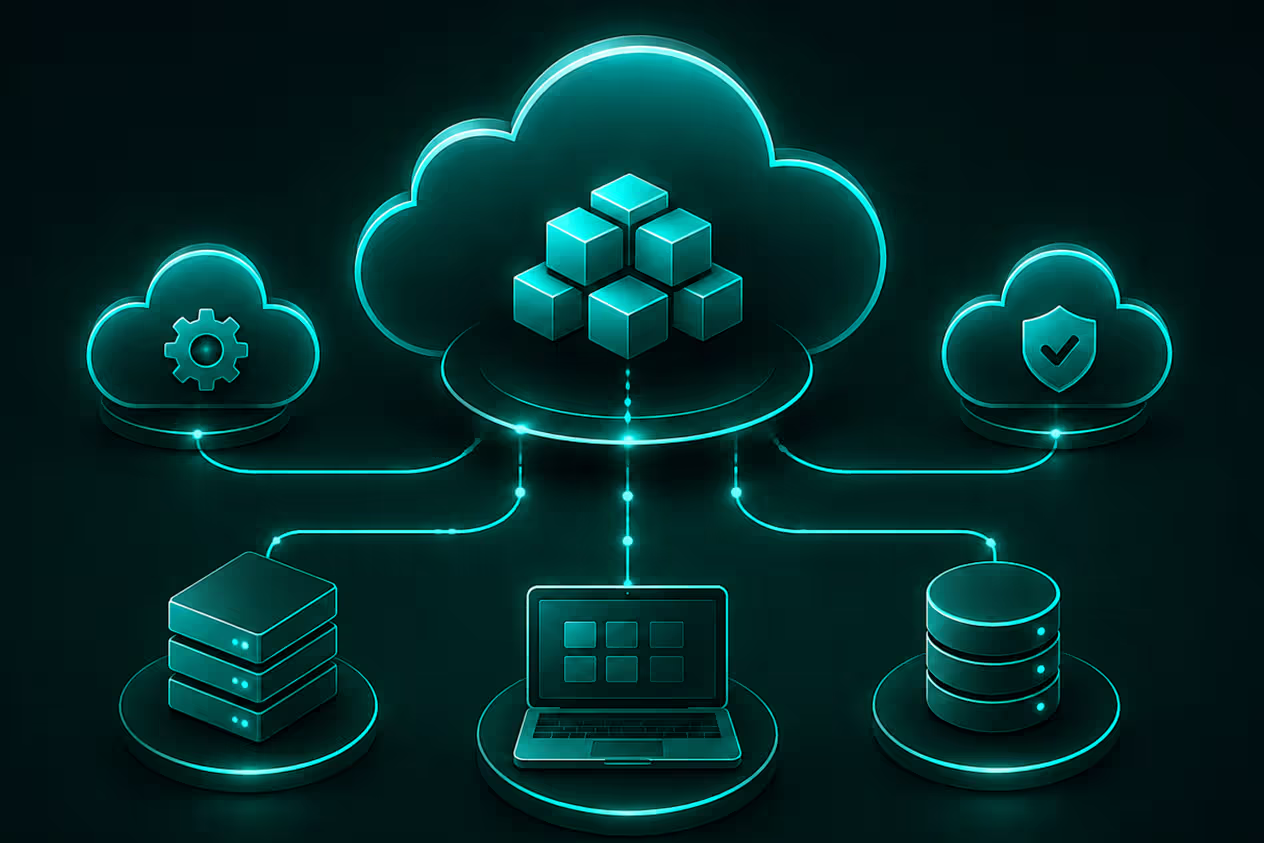
FutureSoft engineers cloud-native applications that use managed services, automation, resilient patterns and observability to support faster change, elastic demand and reliable operations.

What Cloud-Native means

A cloud-native application is designed around automated environments, service boundaries, secure identity, resilient communication, observable operation and managed platform capabilities. It does not require every solution to become microservices, containers or serverless. Architecture should use the simplest pattern that satisfies scale, resilience, release and ownership requirements.

Cloud Integration

  • Cloud-native solution architecture
  • SaaS and multi-tenant application design
  • Managed relational and NoSQL data services where appropriate
  • Caching and content-delivery integration
  • Event and queue-based processing
  • Containerized workloads
  • Serverless functions where appropriate
  • Identity, secrets and key management integration
  • Infrastructure as code and automated environments
  • CI/CD and release controls
  • Resilience, backup and disaster-recovery design
  • Application observability
  • Cost-aware architecture and workload choices

Cloud App Development

Through our cloud app development services, we offer end-to-end solutions, from design to deployment, ensuring scalable, secure, and optimized app performance. We harness cloud prowess to offer customized applications for your business.

Architecture choices we make deliberately

  • Modular monolith vs microservices
  • Synchronous APIs vs asynchronous messaging
  • Containers vs serverless vs managed platform services
  • Shared vs isolated tenant resources
  • Relational vs document/key-value data models
  • Scale-up vs scale-out strategies
  • Managed service convenience vs portability and control

Delivery approach

  • Define workload, users, scale profile, availability targets and compliance constraints.
  • Identify domain boundaries, data ownership and integration dependencies.
  • Select the appropriate cloud services and runtime patterns.
  • Design security, identity, secrets, network dependencies and data protection.
  • Automate build, environments, deployment and quality gates.
  • Engineer resilience, retries, timeouts, health checks and observability.
  • Validate performance, recovery and cost behavior before production rollout.

Boundary with Application Modernization and Cloud & Data Platform Services

This page focuses on new applications and major new capabilities designed for cloud operation. Rehost, replatform and refactor decisions for existing systems belong to Application Modernization. Enterprise landing zones, shared cloud foundations, infrastructure operations and enterprise data platforms should be coordinated with Cloud & Data Platform Services.

What you receive

  • Cloud-native target architecture
  • Runtime and managed-service selection rationale
  • Security and identity design
  • Data and integration architecture
  • Infrastructure-as-code and CI/CD configuration under the agreed scope
  • Observability and operational dashboards
  • Performance and resilience test evidence
  • Production-readiness runbook

Our Cloud App Development Services

Cloud App Development

Through our cloud app development services, we offer end-to-end solutions, from design to deployment, ensuring scalable, secure, and optimized app performance. We harness cloud prowess to offer customized applications for your business.

Cloud Integration

Being a leading cloud app development company, we specialize in cloud integration, connecting your applications with cloud services and third-party systems. This ensures a unified and efficient workflow and enhances operational efficiency and data coherence.

Cloud Application Development & Integration

We engineer cloud-based application integrations that connect business applications with supported cloud services and third-party systems. Integration architecture is defined around supported services, identity and access patterns, networking responsibilities, data flows, and interface requirements. Integration choices and responsibilities are validated against the target operating environment, with implementation supported by appropriate technical and integration evidence.

Cloud Application Maintenance & Support

Support can cover application runtime configuration, release updates, observability, incident diagnosis and performance tuning within an agreed application scope. Ongoing infrastructure operations or shared cloud-platform administration remain outside this page.

Application Runtime & Environment Engineering

FutureSoft can configure and automate the application’s deployment environments, runtime settings, monitoring and scaling rules as part of delivery. Ownership of enterprise landing zones, networks, shared platform services and infrastructure operations should route to Cloud & Data Platform Services.

LET’S BUILD BETTER

Define a cloud architecture that matches the application’s real requirements.

Start with the workload, scale, availability, security and ownership model—not with a predetermined cloud pattern.

FAQs

Find quick answers to the most common questions about our services, process, and solutions.

FAQ
Does cloud-native mean microservices?

No. Microservices are one possible pattern. A modular monolith may be more appropriate where scale, team structure and release independence do not justify distributed-system complexity.

Can you build multi-tenant SaaS products?

Yes. Tenant isolation, configuration, administration, data separation, scale and operational requirements should be defined explicitly during architecture.

Do you support AWS and Azure?

The current site references both. Publish only the services and certifications that FutureSoft can validate against current team capability and recent delivery.

Can you migrate an existing application to cloud?

Yes, but migration of an existing application belongs to the Application Modernization pillar, where rehost, replatform, refactor or rearchitect options can be assessed.

Get Connected to FutureSoft

Stay Connected to Global Success